
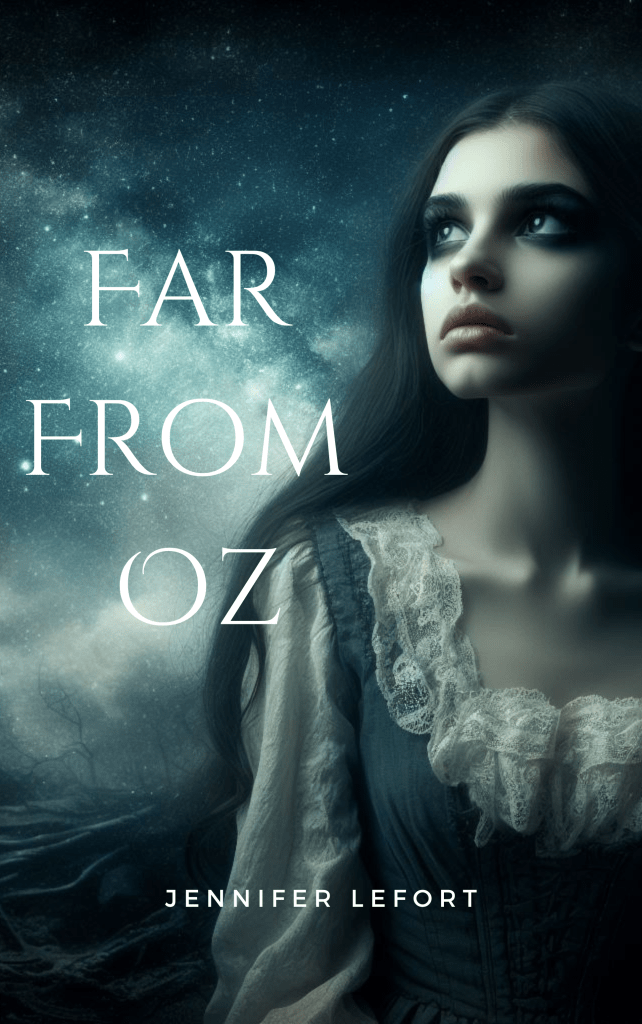
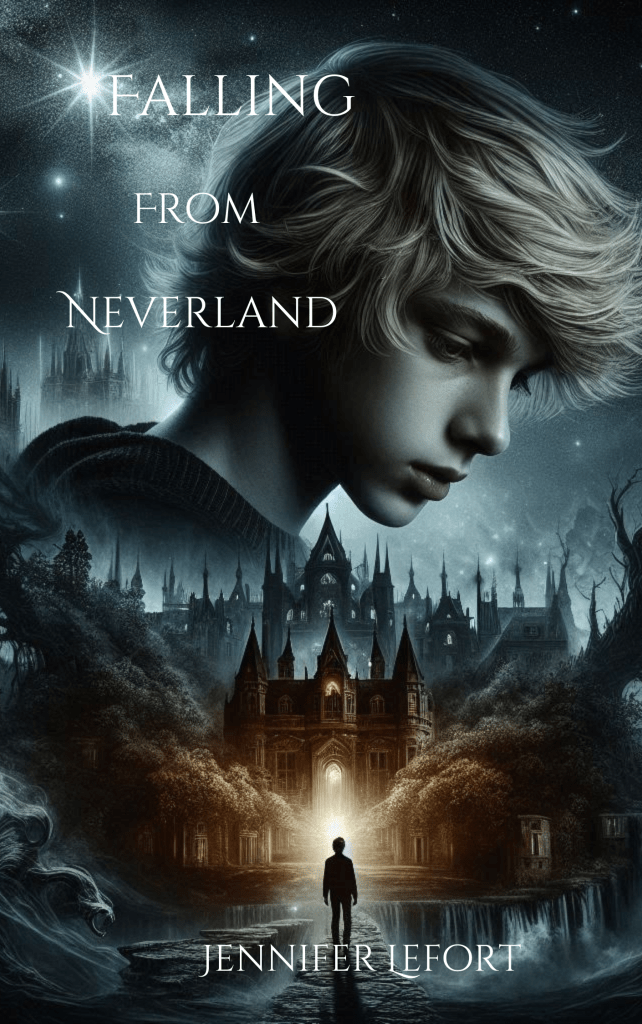
For a long time, I have talked about Far From Oz—sharing chapters, discussing the characters, and celebrating the journey it took to bring that story to life. I began drafting it in 2012, and finally reaching the point where I could say, “I’m done,” was a feeling I’ll never forget.
But today, I want to talk about the second book in the series.
Falling from Neverland took just as long to write, but this time I challenged myself to dig deeper. I spent countless hours revising every chapter, tightening every scene, and ensuring the emotions I felt while writing were the same ones readers experienced as they turned the pages.
Even the covers represent that journey. I began creating my covers in Canva before discovering Microsoft Designer, which helped bring to life the haunting images that now represent both Far From Oz and Falling from Neverland.
Although the titles may remind readers of familiar fairy tales, these books are not retellings.
Instead, they explore the people behind the stories.
They are about grief, trauma, fear, hope, and the struggle to find light when darkness feels overwhelming. Each character carries wounds that cannot simply be wished away. Each must confront the truths that keep them trapped before they can move forward.
In Falling from Neverland, the asylum becomes more than a setting—it becomes a reflection of the mind itself. Every hallway hides memories, every shadow conceals regret, and every character must decide whether they will surrender to the darkness or fight for the light still burning within them.
Wendy desperately wants to be loved but believes she is destined to be abandoned.
Timothy refuses to let go of hope, even as the darkness tells him he belongs to it.
And those who once believed they were saving others must face the devastating cost of their own choices.
Mental health and trauma are deeply personal subjects. They shape the way we see ourselves and the world around us. My goal has never been to provide easy answers, but to tell a story that acknowledges those struggles while reminding readers that even the smallest light can guide us forward.
If these themes resonate with you, I hope you’ll step into the darkness with Wendy, Timothy, Dorothy, and the others—and discover what they’re truly fighting for.
Excerpt
Wendy Bloom
As the day ticks by, I lie in my bed, refusing to speak to those who deem it necessary to enter my room. The plates of food they bring remain untouched. My world has fallen apart. While Dorothy remains protected by the foolish and the weak-minded, Timothy suffers in Darkness.
He should have stayed in the light. Why did he risk himself for something he couldn’t save? Dorothy is not of the light, and she is the cause of all the bad things that have happened here. Dr. Hamish is mad to think otherwise, and the nurses and the remaining orderlies seem just as foolish.
Tired of lying on my back, I roll to my side to face the window. The fading light reflects off the pond’s surface. I remember the first time I saw Timothy by the water, shining brightly in the sunlight. His light chased away the darkness threatening to claim me. From that day, I yearned to know him, to be close to him. Though he never spoke directly to me, I hung on his words to others about his lagoon, how it sparkled with all the colors of the rainbow. I’ve seen the pictures in his room. I know it’s a real place, even if Dr. Hamish does not believe so. Timothy would often speak of mermaids, and how their songs filled the air.
I have seen Timothy’s world, though he refuses to believe it. I know it exists, even if the others do not. What I know to be true is more than a pretty picture, and more than a child’s story. The place I speak of is a world Timothy would have returned to, and I would have been by his side—a place reserved for only a special few, and Dorothy was not among us.
Tired of this place I am forced to remain in, I close my eyes and envision the world I yearn to return to. I want to remember what it feels like to soar above the clouds, to return to my happy place, but as the first images of home return, so does my mother’s voice: “I feel the darkness in you, little Wendy.”
Though I wish to fight it, I am not strong enough. I see my mother standing over me, her eyes devoid of love. The sound of children laughing saddens me. My voice breaks as I plead, “I only want to play, mama.”
“If only you were a good child. Then maybe you could. But you are not a good child, Wendy.”
Tears swell in my eyes, a response that always seems to please her. “I don’t want to be bad, mama.”
My chest hurts and a sob breaks free. I don’t want to be bad; I remember thinking; I want to be good so that mother will love me. But I am not good. Even Timothy said so, and just like mother, he will never love me.
Timothy Reign
The void’s silence is deafening, yet within it, I battle fiercely with my thoughts of her. I cling to her image, fearing its loss into the eternal dark. Drifting deeper into Nightmare’s dominion, I imagine her hand clasped in mine, drawing strength from the very notion of her reach from beyond this ghastly realm. The memory of our first encounter brings warmth, a vivid reminder of how her presence dispelled the creeping shadows that nearly claimed me. It was then I understood—she was my savior from the stark harshness of reality, a beacon igniting something profound within me that I dared not believe existed before her.
Her touch, though just a memory, lingers intensely. I yearn to reach out, to express the depth of my feelings, but an unsettling sense pervades—her doubt, her confusion, her heartache. These emotions, once distant, now bleed into me, her pain morphing into my own suffering. Despite my intentions, my departure—meant to shield her—has left her isolated in sorrow. She cannot see that my leaving was a sacrifice to protect her, to prevent her from spiraling into Nightmare’s abyss, unworthy of her radiance.
In the pitch black of this world, a voice taunts me, claiming possession over me. But its claim is a lie I refuse to accept. My resolve hardens; I am determined to return, to explain, to show her a world where happiness is unending and her smile—a light that fuels the warmth within me—never fades.
“Why would I let you?” the Darkness challenges, its voice echoing through the void, a stark reminder of my struggle. It insists on a permanent claim, but I resist, my purpose in the Real now clear. Her name, Dorothy, is my rallying cry, my promise to never abandon her, to always remain by her side. This vow rekindles my will to fight.
The Darkness tries to constrict me, its coils tightening with each thought of escape. It threatens that to destroy it would mean my own destruction, for it is a part of me. Yet, even as it attempts to suffocate my spirit, Dorothy’s name is a beacon, pulling me back from the brink. Her memory is my sanctuary, my hope.
As I gasp for air, defiant, the darkness momentarily loosens its grip. With each breath, my spirit is fortified. In this fleeting victory, I confront the abyss, declaring my resolve with newfound vigor, “I will never lose to you. I will cast you out.”
In this declaration, light seeps through the cracks of my dark prison, guiding me toward freedom. It is in her name, for her, that I vow to continue this fight. To return to the Real, to defeat the darkness, and to ensure that Dorothy’s world—and mine—are forever free of Nightmare’s torment.
Haunted
As I step cautiously through the dimly lit corridors of the hospital, the weight of the past clings to me like the shadows that dance along the edges of my vision. Each flicker and whisper of darkness seems to pulse with the echoes of those I couldn’t save, turning the asylum into a living canvas of deepest regrets and unresolved torments. The vines of darkness that crawl across the floors and embed themselves into the walls serve as stark reminders of the failed aspirations and the haunting truth that the past is indelible.
Haunted by the silhouettes of the lost, each step forward is burdened with the realization of the limitations and the consequences of my choices. I recall the ambition of my youth, the noble intent to transcend the failings of my father and to forge a new path in the realm of medicine, one that offered hope and healing to those marginalized by society. Yet, the reality of those efforts, tainted by the very darkness I sought to eradicate, unfolds around me, a grim testament to the complexity of human endeavor.
The science that once held the promise of liberation instead became a veil over my eyes, obscuring the human cost of misguided treatments and unchecked ambition. It was only as the graves multiplied and the patient halls thinned that the veil lifted, revealing the grim spectacle of my family legacy. The patients, reduced to mere subjects in the pursuit of medical advancement, became the specters that now haunt the peripheries of your conscience.
With each echoing footstep through the asylum’s halls, I confront the chilling impact of my actions. The few who survived, whose lives that were spared, stand as hollow victories overshadowed by the many that could not save. Though the field of medicine may herald the progress achieved at such a dire cost, the personal toll exacts a relentless burden on the soul.
In this twilight of my career, as I navigate the labyrinth of my own making, the realization dawns that peace may forever elude me. The faces of those I failed, etched into the darkness, their whispers blending with the creeping vines, are a constant reminder of the price of failure and the elusive nature of redemption. They are my enduring companions, ensuring that justice, as defined by the haunted and the lost, served in the quiet torment of my dreams.
“These aren’t fairy tale retellings. They’re stories about finding light in the places where we fear it no longer exists.”


Leave a Reply